Monday, April 15, 2013

The Re-Education of Barack Obama - Midwestern People of Color Legal Scholarship Conference

The Midwest People of Color Legal Scholarship Conference will be hosted by the Loyola Law School Chicago on April 19-21, 2013, and its theme is "The Re-education of Barack Obama."  After a divisive first term in office, the nation re-elected President Barack Obama despite a deep disaffect felt by both conservatives and progressives.  The Re-education of Barack Obama conference will seek to assess the policy victories and failures in the President's first term and will strive to provide progressive inspiration for second term policies and actions.  Professors and scholars of color from across the country will convene in Chicago and engage in this scholarly debate beginning on Friday, April 19th.

The program details are below:


MIDWESTERN PEOPLE OF COLOR LEGAL SCHOLARSHIP CONFERENCE
MWPOC

“The Re-Education of Barack Obama”

Loyola University Chicago School of Law
25 East Pearson Street, Chicago, IL

April 18-21, 2013

Schedule of Events

Thursday, April 18th:
6:30-9:00 p.m.  Opening Reception, Loyola University Chicago School of Law
Video, State Senator Barack Obama, 1999 Speech Delivered at Loyola University

Friday, April 19th:
8-8:50 a.m.  Continental Breakfast and Registration
8:50-9:00 a.m.  Welcome, Neil Williams, MWPOC
9:00-10:30 a.m.  Plenary Panel:  National Security and International Relations Policies
10:40 – 12:10 p.m.  Plenary Panel:  The War on Drugs and the Prison Industrial Complex
12:30 p.m.  Lunch
2:00-3:30 p.m.  Plenary Panel:  Capital Markets and Financial Regulation
3:40-5:05 p.m.  Plenary Panel:  Immigration Reform
5:15 – 6:00 p.m.  Concurrent Works in Progress
6:30 p.m. Dinner:  John Hancock Building, Signature Room at the 95th

Saturday, April 20th:
8-9:00 a.m. Continental Breakfast and Registration
9:00-10:30 a.m.  Plenary Panel:  Critical Supreme Court Cases
10:45 – 12:15 p.m.  Plenary Panel:  Effectiveness of the Affordable Care Act (ObamaCare) in
Eliminating Racial Health Disparities
12:30 p.m.  Lunch – Keynote Presentations, Ms. Janet Bell, Reflections on the Legacy of Derrick Bell; Professor Shavar Jeffries
2:00 – 3:30 p.m.  Concurrent Works in Progress
3:45 – 5:15 p.m.  Concurrent Works in Progress
5:30 – 7:00 p.m.  Concurrent Works in Progress
7:00 p.m.  Dinner: On Own

Sunday, April 21st:
9-10:00 a.m.  Continental Breakfast
10:00-12 Noon  Roundtable:  Retrenchment:  Responding to the Law School Crisis
12 noon  MWPOC Business Meeting
1:00 p.m.  Adjourn

Thursday, April 11, 2013

Catching Up On Links . . .

Several important stories have surfaced over the past several weeks, including:

A Failed Whale, And How To Fix It, by Alexis  Goldstein [The Nation]
Jamie Dimon, CEO JP Morgan
Describing JP Morgan CEO Jamie Dimon's role in the "London Whale" scandal that lost JP Morgan billions.  According to Goldstein:  "Even in the wake of the financial crisis, the bailouts and ongoing bank malfeasance, Washington has remained deferential to the financial industry. Regulators parrot the industry's talking points and use them as an excuse to water down important parts of the Dodd-Frank Wall Street Reform and Consumer Protection Act. And congressional representatives on both sides of the aisle continue to introduce bills to slowly gut Dodd-Frank.  What has JPMorgan Chase been doing while Washington is so dutifully doing its bidding? In the words of the stunningly comprehensive [Senate] subcommittee report [on the London Whale scandal], JPMorgan Chase 'manipulated models; dodged OCC oversight; and misinformed investors, regulators, and the public about the nature of its risky derivatives trading.' Lest you think this is all, rest assured that there is more: JPMorgan was also hiding losses and ignoring its own internal warnings that risk was increasing dramatically."

King Cotton's Long Shadow, by Walter Johnson [New York Times]
Answering the question of "What was the role of slavery in American economic development?"  According to Johnson:  "The most familiar answer to that question is: not much. By most accounts, the triumph of freedom and the birth of capitalism are seen as the same thing. The victory of the North over the South in the Civil War represents the victory of capitalism over slavery, of the future over the past, of the factory over the plantation. In actual fact, however, in the years before the Civil War, there was no capitalism without slavery. The two were, in many ways, one and the same."

Who Will Get the Real Mortgage Crisis Profits? by Peter Miller [Ourbroker.com]
Describing the massive profits housing giants Fannie Mae and Freddie Mac received in 2012, and wondering who will ultimately reap these rewards if Fannie Mae and Freddie Mac are privatized.

Inside the Belly of the Beast: Corrections Corporation of America and the Recession, by Hadar Aviram [California Correctional Crisis Blog]
Describing the business model of the private for-profit prison industry, particularly in recessionary times.  According to Aviram:  CCA institutions - of which it operates 67 and owns 49 - are located in 20 states and in DC (6 of their institutions are, at this point, vacant). After an initial period of time, population in its private institutions averages 89%. A minimum occupancy is often, albeit not always, mentioned in its contracts with the states to whom it provides services. The business model is structured around the concept of a "per-diem", that is, the state pays a price per-inmate-per-bed-per-day. . . .  Who are CCA's main customers? Well, the federal government, for one. Revenues from federal clients comprise 43% of CCA's total revenue for the years 2010 and 2011. But of the states that contract with CCA, California is a major contributor, providing CCA with 13% of its management revenue."


[photo courtesy of Steve Jurvetson, via Creative Commons]

Friday, April 5, 2013

GEO Group Stadium Naming Deal Fails

FAU Students Protesting GEO Group Naming Deal
When the GEO Group and Florida Atlantic University agreed to a $6 million football stadium naming deal in February 2013, neither GEO CEO George Zoley or FAU President Mary Saunders anticipated the incredible backlash that descended upon the private for-profit prison company (GEO) and the University.  Due to student protests, faculty opposition, national media attention being drawn to GEO's terrible record of human rights violations in its private prisons, and the quickly assigned nickname of "Owlcatraz" to the FAU Owls football stadium, GEO Group announced yesterday that it was withdrawing its pledged stadium naming donation.  In pulling its $6 million pledge, CEO Zoley released a self-serving statement blaming "distractions" as the reason that the pledge was being withdrawn.  Per Zoley:  "What was originally intended as a gesture of GEO's goodwill to financially assist the University's athletic scholarship program has surprisingly evolved into an ongoing distraction to both of our organizations."

The "surprising[] . . . distractions" to which Zoley refers include (a) student protests challenging FAU to reject the donation as hypocritical pointing out that GEO Group's profit base is derived almost entirely from human misery and suffering, (b) an overwhelmingly passed faculty resolution calling upon President Saunders to cancel the deal because GEO Group's "business practices do not align with the mission of the university," (c) a sit-in held in President Saunder's office by students, (d) a mocking national spotlight from Stephen Colbert's comedy/news show (suggesting that one of the problems of drawing attention to your business, is that people will pay attention to what your business actually does), and (e) community outrage protesting GEO's intimate affiliation with an institution of higher education.

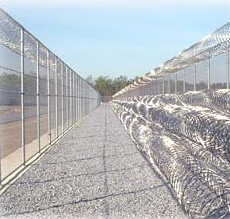
As has been discussed in this blog space often, private prison companies are perversely incentivized to generate profit based on human misery through working to increase the incarceration levels of United States citizens and immigrants.  Private prison corporations pay dozens of millions of dollars to lobby legislators for harsher sentencing regimes, new crimes that require incarceration (AZ SB1070), and increasing prevalence of private prison contracts based on dubious claims of efficiency and cost savings.  Without providing any product or needed public good, GEO Group, the Corrections Corporation of America (CCA), and other private prison companies profit in two primary ways that are incredibly objectionable:

First, private prison companies contract with state and federal governments to warehouse U.S. prisoners and are paid in taxpayer funds on a "per bed" basis.  Essentially, taxpayer funds are being transferred from taxpaying citizens into the pockets of private prison company executives and shareholders for no recognizable good or service.  Almost all of the recent emerging evidence suggests that private prison companies run prisons LESS efficiently, LESS safely, and LESS cost effectively than do federal and state governments.  The Lake Erie Prison report just released finds that CCA is so profit driven, that the CCA- run prison at Lake Erie does not provide proper supervision of prisoners and that drug use and violence are rampant, both in an attempt to avoid costly prisoner lawsuits. 

Second, private prison companies exploit the labor of the prisoners in their care by entering into contracts with companies like IBM, Victoria's Secret, WalMart, and McDonald's for prisoners to work for pennies with the contractual rewards paid into the coffers of the private prison company (thus to shareholders and executives).  Prisoners are paid between $0 and $4 for the labor that they engage in sewing for Victoria's Secret, manufacturing for WalMart and McDonalds, with the fruit of their labor being paid to the prison company rather than to the prisoner.  Indentured servitude continues in our prisons in the United States and the GEO Group and CCA profit from these immoral activites.

Rendering of how GEO Group Stadium would have appeared
That both of these profit sources continue in the United States today is shocking.  That the students, faculty, and community at FAU recognized this appalling business model is heartening. The GEO Group's name will NOT adorn the football stadium at FAU.  It appears that "surprising[] . . . distractions" of massive protest are just beginning for the private prison industry.


 cross-posted on the Sports Law Blog

Wednesday, April 3, 2013

Criminal Justice in the 21st Century Symposium

The Journal of Civil Rights and Economic Development of the Ronald H. Brown Center at the St. John's School of Law will host a powerful event on Friday, April 5, 2013 entitled "Criminal Justice in the 21st Century: The Challenge to Protect Individual Freedoms, Civil Rights and Our Safety."  The event is free and open to the public beginning at 8:00 a.m. and will deal with criminal justice issues including prison policy, civil rights and civil liberties, and expanding prosecutorial and police power.

According to the event site:

"Criminal justice in the 21st Century confronts a combination of novel and familiar challenges. New technology and new legislation purport to redefine individual rights, such as the right to privacy or the right to bear arms, in the name of greater public safety. While the past decade boasted a record low number of reported crimes, prosecutorial and police power continues to expand. These issues raise a question of whether there is any legal,constitutionally sanctioned manner to balance individual rights and safety concerns.

This Symposium provides a balanced discussion about pertinent 21st Century criminal justice issues. It weighs broader societal interests, such as safety and public order, against individual interests, including civil rights and civil liberties, privacy and autonomy. This symposium confronts these difficult issues with an open, informed perspective that fosters dialogue with an end towards positing practical and effective solutions."

The event will take place at St. John’s School of Law, 8000 Utopia Parkway, Queens, NY 11439.

Saturday, March 30, 2013

The Failing Private Prison Experiment

The private for-profit prison industry stakes its claim for securing government contracts to warehouse prisoners on providing greater efficiency.  Executives for private prison corporations claim that they can better manage taxpayer monies by running prisons more cost effectively and more safely.  Recent research indicates that both of these claims are simply untrue.  Why any state or government would turn over prison care to private concerns is becoming a mystery in light of this emerging evidence.  Unless of course, greed is the primary motivator and massive profits for executives and shareholders is the end game.  Private prisons have become a money-grab, simply transferring taxpayer monies to private industry players, who provide failure in return.

To wit, the Lake Erie Correctional Institution that was purchased in 2011 for $73 million by the Corrections Corporation of America (CCA) from the state of Ohio.  A report out last month describes in harrowing detail the dysfunction and failures that have occurred at the prison since CCA's takeover.  The Executive Summary of the non-partisan report detailed the conditions of Lake Erie Prison since CCA took possession: 

"LAECI’s primary issue is safety and security. Staff interviews, inmate focus groups, the inmate survey, and institutional data all indicate that personal safety is at risk at LAECI. Assaults, fights, disturbances, and uses of force have all increased in comparison to prior years. There is a high presence of gang activity and illegal substance use. Inmates reported frequent extortion and theft.

Incident reports indicate that staff hesitate to use force even when appropriate and at times fail to deploy chemical agents prior to physical force, risking greater injury to both inmates and staff. Staff also do not appropriately sanction inmates for serious misconduct. At the time of the inspection, the facility had no options for sanctions other than the segregation unit, which was full. 

The above issues are compounded by high staff turnover and low morale. New staff generally do not have the experience or training to be able to make quick judgments regarding the appropriate application of force or how to handle inmate confrontations. Staff also reported that they are often required to work an extra 12 hours per week, which may impact their response."

More efficient?  Hardly.  The actual result at Lake Erie since CCA took charge is greater violence, increased gang activity and illegal substance use, higher staff turnover, less safety, and greater chaos.  Guards believe that CCA management is so concerned with being sued (and thus losing profits) that they do not allow the guards to properly police the prison population.  

The private for-profit prison experiment is failing.

[photo is in the public domain]

Friday, March 22, 2013

Incarceration Nation

Professor Paul Butler penned an opinion piece for the New York Times this week, Gideon's Muted Trumpet, where he traces the history of incarceration in the United States since the Gideon v. Wainwright case was decided fifty years ago.  Essentially, Gideon guarantees that a poor person will be given access to a lawyer when charged with a serious crime.  Often the Miranda warning, repeated on a loop in television police dramas, comes to mind when thinking about Gideon's guarantee of legal representation (i.e., You have the right to remain silent . . .  You have the right to an attorney.  If you cannot afford an attorney, one will be provided for you . . .).  But what has this guarantee wrought after fifty years? 

Per Butler:  "A poor person has a much greater chance of being incarcerated now than when Gideon was decided, 50 years ago . . . . This is not because of increased criminality — violent crime has plunged from its peak in the early 1990s — but because of prosecutorial policies that essentially target the poor and relegate their lawyers to negotiating guilty pleas, rather than mounting a defense."

Butler's op-ed discusses the underrecognized problem of prosecutorial discretion, which infuses an enormous amount of power in the men and women that prosecute federal and state crimes in the U.S.  Butler writes:  "The so-called war on crime greatly expanded criminal liability. A prosecutor can almost always find some charge: there are over 4,000 crimes on the federal books alone. Recreational drug use is one of the more popular activities in America, but racial minorities suffer the brunt of drug-related convictions.  In part because of federal grants to states to incarcerate drug offenders, the United States experienced the largest increase in incarceration in the history of the free world. Our population is less than 5 percent of the world’s but we have nearly 25 percent of its prisoners. When Gideon was decided, about 43 percent of defendants were indigent. Now, over 80 percent are."

The United States continues to wage an internal war against its own citizens, particularly if a U.S. citizen happens to be poor and minority.  It is simply the easiest way to appear tough on crime and to fill our nation's prisons, increasingly operated by private prison corporations for profit.

Tuesday, March 19, 2013

Wall Street Pay Rises; Worker's Pay Does Not

Bonuses on Wall Street rose 9% in 2012, nearing former record highs, at the same time that pay for U.S. workers continues to stagnate.  Up until the 1970s, worker compensation and productivity rose simultaneously, rewarding workers for gains in productivity.  However, since 1978, worker compensation has flatlined while productivity has increased markedly.  The benefits of greater productivity have gone almost exclusively to shareholders and corporate executives and not to the employees driving the gains.  "Companies are on a tear in terms of productivity and profits, but they aren't sharing much of the gains with their workers. . . .  Productivity, which measures the goods and services generated per hour worked, rose by 80.4% between 1973 and 2011, compared to a 10.7% growth in median hourly compensation . . . ."

With unemployment still hampering many American workers, bonus pay on Wall Street is projected to rise another 8%  in 2013.  Despite the increase in compensation, Wall Street banks continue to slash jobs to cut costs and spur profits. Meanwhile, "[e]mployers are achieving their gains with fewer workers []. U.S. economic activity is now 2.5% higher than it was when the recession began in late 2007, but there are more than 3 million fewer workers on the job, said Mark Perry, a scholar at the conservative American Enterprise Institute." To that end, Wall Street continues its tone deaf march intent on enriching its executives at the expense of its employees and the United States economy.

Friday, March 15, 2013

Wealth Inequality Gap Widens

Wealth inequality between white families and African American families continues to worsen. According to a new study out of Brandeis University “[t]he wealth gap between blacks and whites has nearly tripled over the past 25 years, due largely to inequality in home ownership, income, education and inheritances . . . .” The largest driving factor in this inequality is in homeownership, more specifically, where homes are purchased as home appreciation is severely limited in non-white neighborhoods making it much more difficult for black families to gain value based on home equity and appreciation. On average, white families are able to purchase a home eight years sooner than a black family and often with larger down payments such that white-owned mortgages have lower interest rates. Further, predatory lending, particularly in the run-up to the mortgage meltdown of 2008, often targets minority communities. 

Additionally, white families benefit at substantially higher percentages than do black families when it comes to inheriting family wealth. “Among the families studied, whites were five times more likely to inherit money than blacks, and their typical inheritances were 10 times as large.” 

While the wealth gap has widened in the past two decades, the financial market crisis exacerbated the problem as African American and Latino wealth dropped by more than 50%, while white wealth dropped by only 16%. According to Pew: "The Pew Research analysis finds that, in percentage terms, the bursting of the housing market bubble in 2006 and the recession that followed from late 2007 to mid-2009 took a far greater toll on the wealth of minorities than whites. From 2005 to 2009, inflation-adjusted median wealth fell by 66% among Hispanic households and 53% among black households, compared with just 16% among white households."

Saturday, March 9, 2013

Bankers Above the Law. . .There Will be Hell to Pay

Earlier this week, Attorney General Holder testified to Congress that:
"I am concerned that the size of some of these institutions becomes so large that it does become difficult for us to prosecute them when we are hit with indications that if you do prosecute, if you do bring a criminal charge, it will have a negative impact on the national economy, perhaps even the world economy. And I think that is a function of the fact that some of these institutions have become too large."
Not only is this testimony flat wrong, I argue that Holder must know that it is at best deeply misleading to Congress and the American people. Here is why:

1) If the DOJ were indicting individual bankers for fraud, then this explanation might explain why banks themselves are never indicted. It does not explain at all the absence of indictments against bankers. In fact, we know that high-level bankers can be incarcerated with zero impact on the economy. This is proven by the case of Raj Gupta, the Goldman board member indicted for insider trading. So, Attorney General Holder's explanation of the lack of criminal prosecution at big banks explains nothing about why no individual or senior manager of any Wall Street bank has been indicted for any crime at all related to the subprime debacle. In short, in announcing a new DOJ policy of "too-big-to-jail," Holder completely failed to justify its most important element--immunity for individual bankers for financial crime.

2) Giving TBTF banks even more in government indulgences is not going to help the economy it is going to drag the economy to the gates of hell. As Bloomberg recently reported the megabanks make little or no money; instead, all of their profits are attributable to the implicit subsidy provided by the perception of government backing which lowers their cost of funds by .80 percentage points. So instead of giving the banks the ability to skirt financial fraud laws, we should be breaking them up, like we did under the New Deal. Perhaps the one silver lining to Holder's comment is that "too-big-to-jail" creates one more reason to break up the megabanks ASAP.

3) Holder is clearly allowing political connections to play a role in prosecutorial discretion and this comment proves it. We know that criminality occurred at MF Global. Yet, no prosecutions occurred. They failed, and no economic dislocation ensued. So clearly no TBTF issue is at play with MF Global. The only issue at play with MF Global was the patent political power of major Obama fundraiser and former Senator and former Governor Jon Corzine. So how does Holder explain MF Global?

4) A key point of my recent book, Lawless Capitalism, is that "investment and financial markets can only be built upon trust." How can any investor trust a financial system dominated by megabanks that are above the law? Capitalism requires trust and trust can only be inspired by a rational rule of law applicable to all. Exemptions for the most economically powerful are likely to be the most economically damaging as they control the most concentrated resources. In other words, giving legal indulgences to those with trillions under their control means that trillions will be deployed with no care towards illegality. Only profit, no matter how cravenly grabbed, will matter. The American people are already rapidly losing trust in the system. In a recent Northwestern/Univ. of Chicago survey, only 22% of Americans trust the financial system.  Holder's bold power-grab on behalf of the banks is sure to accelerate this unraveling of trust. That means severe economic pain.

5) Another key point of Lawless Capitalism (as well as Daron Acemoglu and James Robinson's instant classic Why Nations Fail) is that laws and regulations must tether elite interests to macroeconomic growth and under conditions of high inequality that challenge intensifies. Holder's statement is simply further proof that elites will eschew the law and seek to operate outside legal constraints once too much economic wealth is concentrated in too few hands. We learned that in the run up to the subprime collapse and Holder seems intent on repeating that painful lesson. This can be termed the injustice of inequality.

Trust and alignment of elite interests are simply two sides of the economic rule of law. A sound economic rule of law must inveigh against elite privilege, mitigate disempowerment and secure rationalized law and regulation. Allowing some to operate above the law is inimical to these goals. Indeed, giving the most powerful in your society a green light for lawlessness tempts the creation of a kleptocracy.

According to Webster's a kleptcoracy is "government by those who seek chiefly status and personal gain at the expense of the governed." In a kleptocracy, the politically connected can pilfer the investments of others with criminal impunity. This past week, the Attorney General of the United States' testimony to Congress signals that those holding the most economic power are indeed above the law--this creates the most perverse incentives.

I graduated law school in 1986. I practiced for 10 years, almost exclusively focused on financial regulation--at the SEC as well as the FDIC. In all that time, I have never heard more nonsense about the law than that spouted by the Attorney General of the United States before the United States Congress earlier this week.

Thursday, March 7, 2013

Will A Stadium "Naming" Deal Celebrate the Perverse Private Prison Industry?

The GEO Group, one of two nationally prominent private prison corporations in America has just signed an agreement with Florida Atlantic University to "name" the football stadium at FAU.  Understandably, this has caused an uproar from many on the faculty and in the student body at Florida Atlantic.  "The GEO Group Stadium" at Florida Atlantic University immediately conjures up images of the now retired "Enron Stadium" where the Houston Astros used to take the field, except that The GEO Group is undoubtedly more sinister and harmful to United States citizens than Enron ever was (a fact absolutely lost on FAU President Mary Jane Saunders until student and faculty protests erupted).

The GEO Group is a private prison company.  As I have written about extensively, private prison corporations essentially collect taxpayer funds from federal and state governments (a "per diem" or per bed fee) in order to house prisoners on behalf of these governments and do so with an immoral profit maximization motivation. Private prison companies profit on human misery.  Shareholders of  GEO Group stock expect the board of directors and executives to return handsome profits from imprisoning United States citizens (and increasingly illegal aliens).  The perversity in this arrangement, of course, is that in order to increase profits for shareholders, private prison companies, including the Corrections Corporation of America (the other prominent U.S. private prison company), seek to aggressively imprison more Americans by lobbying legislatures to increase sentencing laws, divine new laws/ways to imprison individuals, and even engage in drafting model legislation like SB 1070 (Arizona's "show me your papers" law) and three-strikes laws.  In "All Eyez on Me: America's War on Drugs and the Prison Industrial Complex," I describe the perverse incentives that motivate the private prison industry by examining the immorality attendant in leadership of private prison companies debating successful ways to increase profit by incarcerating more United States' citizens.

Private prison companies have flourished in recent years based upon the increasingly dubious claim that they provide prison services for less cost than do governmental agencies.  While numerous studies dispute this assertion, the bottom line economic transfer is that taxpayer funds are being funneled to private prison companies (and its executives and shareholders) without those companies providing any genuine public good or manufacture of product.  Indeed, recent reports indicate that private prison companies engage in gross human rights and constitutional violations, more egregious than government run prisons.

And now, FAU has signed an agreement to partner with The GEO Group allowing GEO to prominently appear on the facade of its' football stadium and increase its corporate branding.  FAU's President appears to have not engaged in any due diligence when signing the naming right, relying singularly upon the fact that the GEO Group Chair is a proud alumnus of FAU.  This is particularly egregious in Florida, where private prisons have attempted to seize on opportunities to stealthily motivate state legislators to sanction massive expansion of the private prison industry.  Students recently orchestrated a "sit-in" where President Saunders was forced to speak to the group, though she claims the naming agreement is a "done deal."  Whether students protests will lead to a repudiation of the agreement remains to be seen.  Sans repudiation, Florida Atlantic University may go down as one of the first American Universities to openly celebrate the incredibly perverse and immoral private prison industry and lobby.


(hat tip to Dave Zirin at The Nation)
cross posted on the Sports Law Blog

Friday, March 1, 2013

The State of the Real Economy

For all of its terrible consequences, lawless capitalism has not destroyed the US economy which is a testament to the fundamental strength, character, and resilience of the American people.

Let's start with productivity. The US is the third most productive economy on earth in terms of GDP per capita. In terms of output per hour worked today's American worker is five times more productive than in 1945. In fact, since 1995 America has seen an above trend productivity surge as evidenced below:

FRED Graph

Indeed, American workers are the envy of the world in terms of productivity growth:


Similarly, the US was recently ranked the 7th most innovative nation in the world by Insead business school.  The US ranks third in the world in patents per capita behind only Japan and South Korea.

According to the OECD the US worker ranks 9th in the world in daily minutes of actual work. As recently as 1997, the US worked more hours per capita than any other nation.

We as a nation face serious economic challenges. First and foremost, we failed to deleverage after the crash of 2008 (by, for example, letting all the excessively leveraged banks fail which would have permitted them to discharge massive debts) and now live in an economy addicted to unsustainable debt (which bond guru Bill Gross terms a credit supernova).

Second, due largely to our failed efforts to revive our economy (because mainly we just pumped massive liquidity into the megabanks which they hoard), our employment participation is still stagnant.

Third, in the wake of the crisis too many Americans took shelter in disability and other forms of government aid which is also unsustainable. More Americans need to return to work.

Finally, unfunded liabilities in terms of entitlements have soared (up to $100 trillion) as growth and employment contracted. As I have argued before we must reform entitlements and gradually raise taxes to the historic norm of 18% of GDP. If there are freeloaders in America today it is clearly the same economic elite that crashed capitalism in 2008, which now refuses to impose a rational tax burden upon themselves:


taxes 

ALL OF THESE PROBLEMS ARE ROOTED IN LAWLESS CAPITALISM.

Tuesday, February 26, 2013

Austerity vs. Growth: Lessons for the U.S. Economy

On Friday, March 1, 2013, the University of Utah S.J. Quinney College of Law will host a timely and important symposium "Austerity vs. Growth: Lessons for the U.S. Economy."  Utah Law Professor Christian Johnson has organized a conference that will examine austerity measures as employed in Europe and the implications of those measures on the United States.  "'Given the current fiscal debate going on Washington and that the sequestration budget cuts are scheduled to begin on March 1, there has never been a program that is more timely,' said conference organizer Professor Christian Johnson. 'The program has been geared to enable everyone from the expert to the neophyte to understand the key debates and issues that need to be decided at this time.  The key note and panel discussions should provide welcome clarity to the difficult fiscal and economic decisions that our country has to make at this time.' According to Johnson, the all-day event will generally ask whether austerity policies will help or harm the U.S. economy."

The keynote lecture will be delivered by Kern Alexander, Chair of Law and Finance at the University of Zurich. Panelists include Clay Lowery, former Assistant Secretary for International Affairs at the U.S. Treasury Department; Dr. Tim Kane, Chief Economist at the Hudson Institute, Dr. Tara Rice, Chief, Global Financial Institutions, Board of Governors of the Federal Reserve, George Sutton, Partner, Jones Waldo Holbrook & McDonough, Professor Jeffrey Schwartz, University of Utah College of Law, Professor Steven Ramirez, Loyola University School of Law, Director Corporate Law Center, Professor Christian Johnson, University of Utah College of Law, Professor Jose Gabilondo, Florida International University School of Law, and Professor andre douglas pond cummings, Indiana Tech Law School.

The event will take place in the Sutherland Moot Court Room at the S.J. Quinney College of Law and is free and open to the public, though registration is required.

Friday, February 15, 2013

Troubling News (Again) Out of Arizona

Arpaio speaking at a Tea Party rally
The Corporate Justice Blog has tackled the prison industrial complex in the past and new news out of Arizona seems to indicate more troubling policies for those interested in sane and safe prison and police policies in the United States.  Controversial Sheriff Joe Arpaio is now sending volunteer law enforcement "posse's" out into communities his agency is sworn to protect in order to patrol near elementary, middle and high schools, none of which requested these additional patrols.  Perhaps most troubling in this new posse policy, is that these volunteer members are neither paid nor trained well before being deployed, some with guns on hip, to administer Arpaio's often unconstitutional policies.

Salon's Chris Feliciano Arnold describes this new mess in great detail in "Sheriff Joe's Posse Invades Guadalupe: The Controversial Sheriff Puts His 'Good Guys' With Guns Around Arizona Schools - They Might Be The Real Threat."  Sheriff Arpaio is currently being sued by the Department of Justice for alleged civil rights violations and other routine unconstitutional activity.


[photo courtesy of Gage Skidmore via Wikimedia Commons]

Friday, February 1, 2013

The Cost of LAWLESS CAPITALISM


Recent weeks revealed new depths of lawlessness at the apex of the American economy. First, in early December we learned in connection with HSBC criminality that the Department of Justice will not prosecute financial criminals working at megabanks. Second, in mid-January we learned from Frontline that former prosecutors at DOJ confirm what white collar crime expert Bill Black first said last fall: that DOJ did not even conduct significant grand jury investigations into criminality at the megabanks in connection with the subprime meltdown of 2007-2009.   

These developments mean that some ill-defined class of powerful corporate elites may engage in criminality for profit with immunity from prosecution. If one of these titans can garner millions through some fraudulent scheme (like this one used at Goldman, Chase, and Citi) they will now face incentives to do so regardless of losses of many times their profits borne by their firms (like this securities fraud by Angelo Mozilo), investors, or the general economy.


So what is the cost of this new government policy of criminal immunity for those that control trillions in economic wealth? Finding the answer to that question is difficult, particularly looking into future of an unprecedented era of lawlessness.

Nevertheless, we do have one important experience--the cost of the subprime debacle. I wrote in Lawless Capitalism that the core cause of the crisis was the power of corporate and financial elites to dominate the law and rig market outcomes. That level of lawlessness is one notch less noxious than the leak to the New York Times on 12/11/12 that elites at megabanks now enjoy near-express criminal immunity for even grand criminality.

So, what were the costs of the subprime debacle? It can be broken into three categories that comprehensively express the costs. First, the costs in terms of forgone GDP. Second, the increased debt incurred by the government as a result of the crisis. Third, the loss in household net worth during the crisis. By any reckoning the cost amounts to trillions in losses, but let me try to roughly calculate how many trillions we are talking about.

1. FORGONE GDP

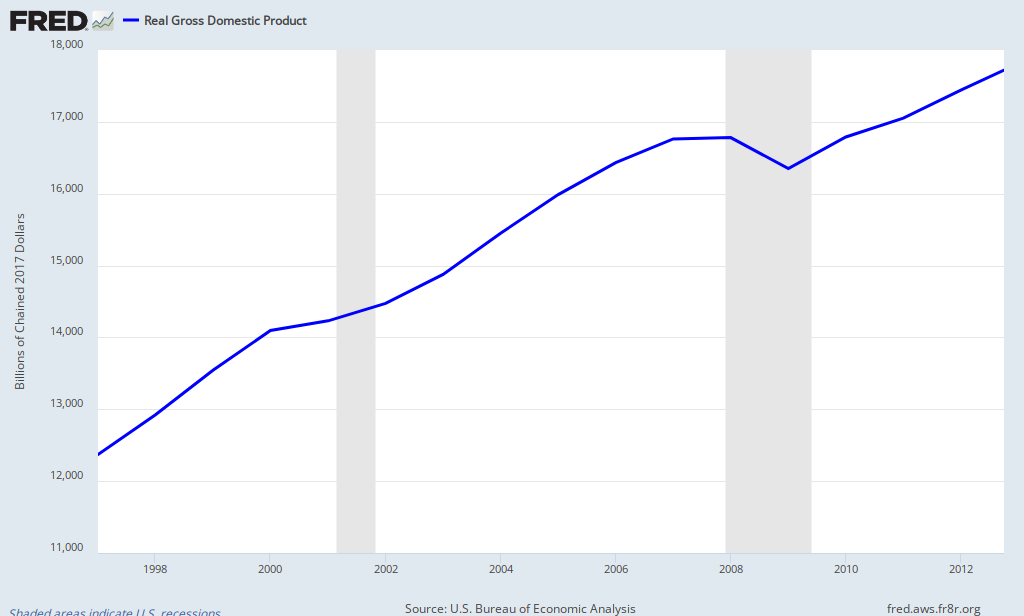
The graph below, from the Federal Reserve Bank of St. Louis, shows real GDP since 1997:

FRED GraphClearly, the crisis of 2007-2009 triggered an irreversible loss of GDP that still has not been halted by a return to prior trend-line growth. Thus, the costs still mount. Nevertheless, real GDP trended towards $14 trillion prior to the crisis and would have reached that point in 2010. Actual real GDP in 2012 still amounted to only $13.59 trillion--at least $410 billion short. 2011 came up at least $680 billion short, and 2010 came up $750 billion short. Those three years total $1.84 trillion in forgone real GDP (2005 dollars). The most brutal years of GDP contraction were 2008 and 2009. To be conservative, those years should be compared to 2007, and real GDP losses total another $450 billion during those two years. In all, it appears that a rough estimate of lost real GDP today totals at least $2.3 trillion (and counting). This number is consistent with economists' analyses suggesting that severe crises such as the subprime debacle lead to output losses of about 25-30 percent of GDP--or about $3.2 trillion in the case of the US.

2. MORE GOVERNMENT DEBT

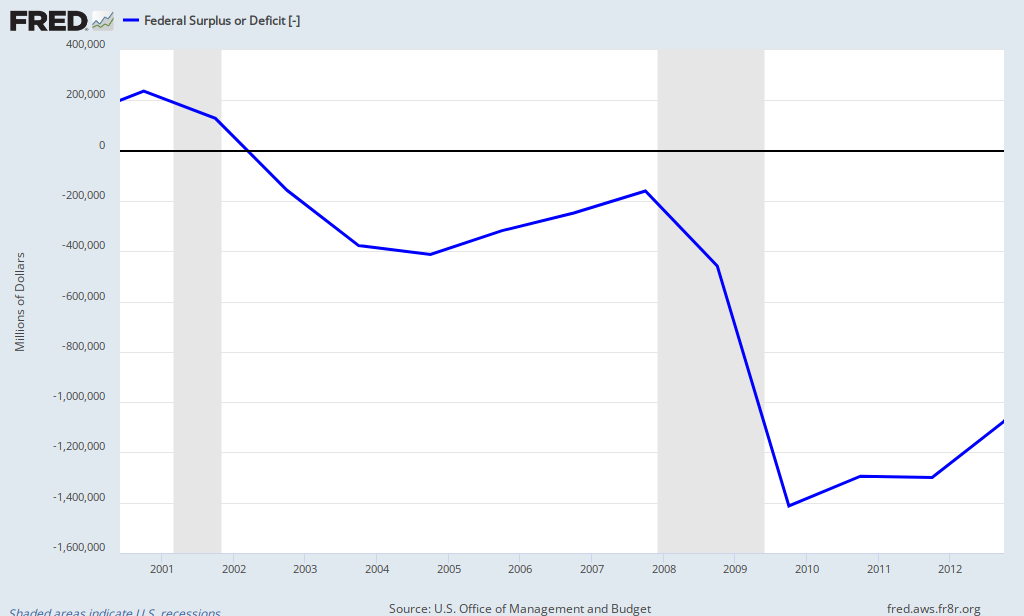
FRED GraphAs the chart, left, shows, the federal deficit increased dramatically as a result of the subprime debacle, and has not recovered. The Bush tax cuts of 2001-2003 (and unfunded wars) built-in structural deficits of about $300 billion per annum. Still, since 2008, additional deficits of trillions of dollars piled-on to those structural deficits. In 2008, the deficit was $459 billion; it expanded to $1.4 trillion in 2009; and most recently in 2012 narrowed to $1 trillion. So, the national debt stood at $9 trillion at the end of 2007 and today stands at $16 trillion. At least $5 trillion of this additional debt is directly attributable to the financial crisis whether from constricted revenues from forgone GDP, the stimulus bill or various and sundry bailouts. These deficits are the cost of a financial crisis requiring a government response without precedent.

3. LOST HOUSEHOLD WEALTH

Recently, a group of Federal Reserve economists estimated the loss to household net worth arising from the subprime crisis of 2007-2009. They found that the mean loss to household wealth was $114,000 per family for those two years. It is unclear how many families there are in the US, but the Census Bureau counts about 110 households. Multiplying the mean loss by the number of households yields a total loss to household net worth of $12 trillion.

That number seemed high until I found this line from the President's Budget Message in 2010: "household net worth fell from the third quarter of 2007 to the first quarter of 2009 by $17.5 trillion or 26.5 percent, which is the equivalent to more than one year’s GDP." Thus, the peak net worth loss was $17.5 trillion but as markets recovered in late 2009, it moderated a bit to that $12 trillion number.

But that $12 trillion is more durable. Housing, which forms the basis of most American net worth still has not recovered. Further, the S&P 500 has still not reclaimed its its peak in 2007--especially adjusted for inflation.  And, in real terms recent gains in net worth are far less impressive. In sum net worth too is still well below the long term pre-crisis trend.

Based upon the foregoing, Lawless Capitalism is enormously expensive. The crisis cost Americans at least $15-20 trillion in economic costs. The fact that some of the costs have been placed upon the government or is in the form of lost net worth does not mitigate the ultimate economic pain associated with the crisis. We now have a government that will have to do less and tax more far into the future. Households have less money for college, retirement, and future consumption. These factors will continue to burden real GDP growth for years to come.

There are other costs to Lawless Capitalism. For example, consider what many call the "freeloader" society. We cannot expect the masses to bear the burden of shared sacrifice when those at the top in our society act so manifestly contrary to any notion of responsible and ethical leadership. Indeed, perhaps the greatest cost of lawless capitalism is impossible to quantify: a society riven with a selfish and unethical ethos of greed. How does one quantify the loss of social cohesion from lawlessness at the apex of society?

I am all ears if anyone can improve on the analysis above.  But, in all events, this lawlessness costs every American tens of thousands of dollars. And, the new lawlessness continues at an ever increasing level, unmitigated by the Dodd-Frank Act.